





How to Choose an Investment Property Broker in Mount Royal
How to Choose an Investment Property Broker in Mount Royal
Which questions actually reveal whether a broker can handle an investment purchase in the Town of Mount Royal? Anyone weighing a duplex or triplex in one of the Montreal region's most supply-constrained municipalities runs into that problem first. A polished website and a general promise of "investment work" answer none of it.
Mount Royal rewards precision because it is small and distinctive. Its population sits near 21,000, a figure from the 2021 Census, and its built form leans heavily toward single-family houses, with duplex and triplex properties filling most of what remains. Large multi-unit buildings are scarce. An investor here is usually buying a two- or three-unit property and often occupying one of the units, which reshapes the arithmetic a broker has to work through.
Start with the pricing environment
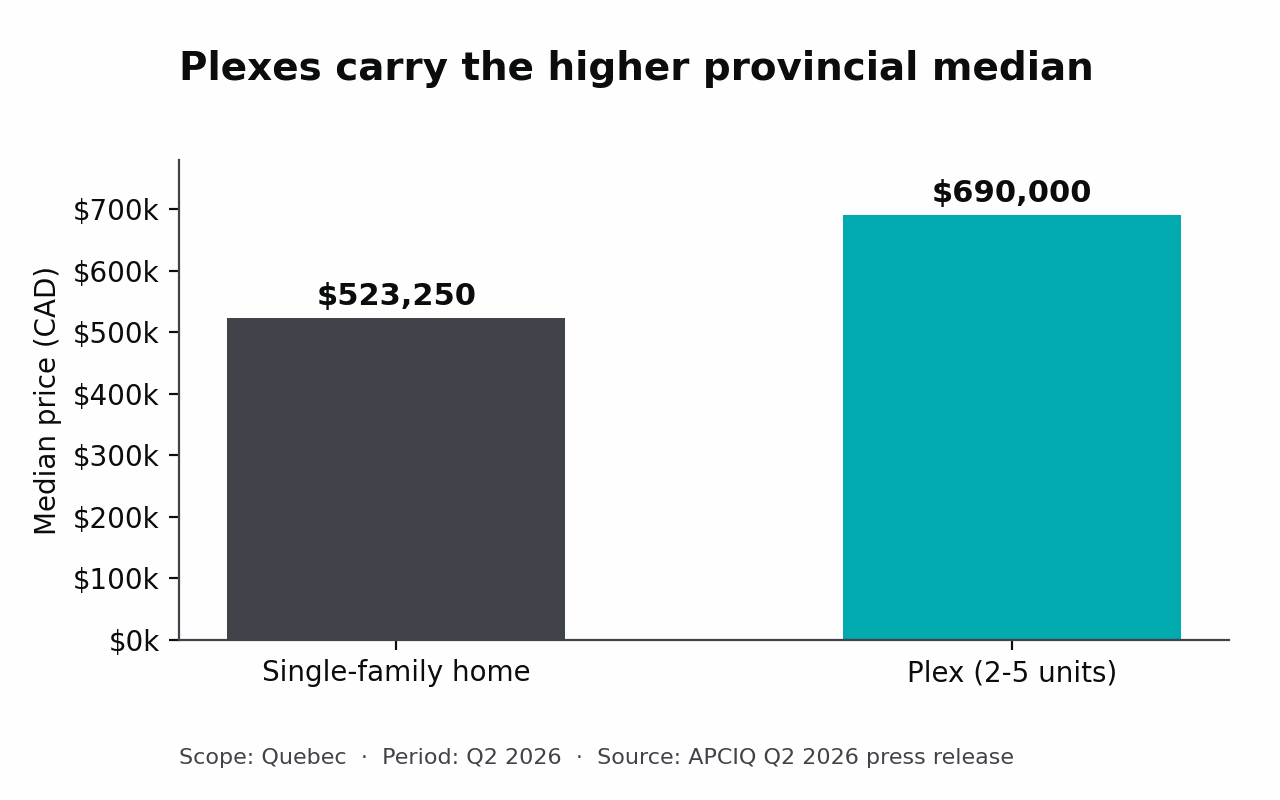
Across Quebec, the median price of a single-family home reached $523,250 in the second quarter of 2026, up five percent from a year earlier. Plexes, the category most relevant to a Mount Royal investor, carried a provincial median of $690,000 in the same quarter, up two percent. Those are provincial figures rather than municipal ones, and Mount Royal typically prices above the provincial midpoint. Even so, they set the direction of travel.
The financing backdrop matters just as much. The Bank of Canada's policy rate stood at 2.25 percent through the late spring and summer of 2026. A rate at that level supports valuations and compresses the returns an investor can expect, which narrows the margin for error on a purchase price. A broker who cannot model a return under those conditions is guessing.
Where scarcity meets the numbers
Inventory across the wider region has loosened. The Montreal census metropolitan area held 41,466 active listings in the second quarter of 2026, fourteen percent more than a year earlier, and plex listings specifically rose eleven percent. More choice regionally does not translate cleanly to Mount Royal, where the pool of investment-grade duplexes and triplexes stays thin.
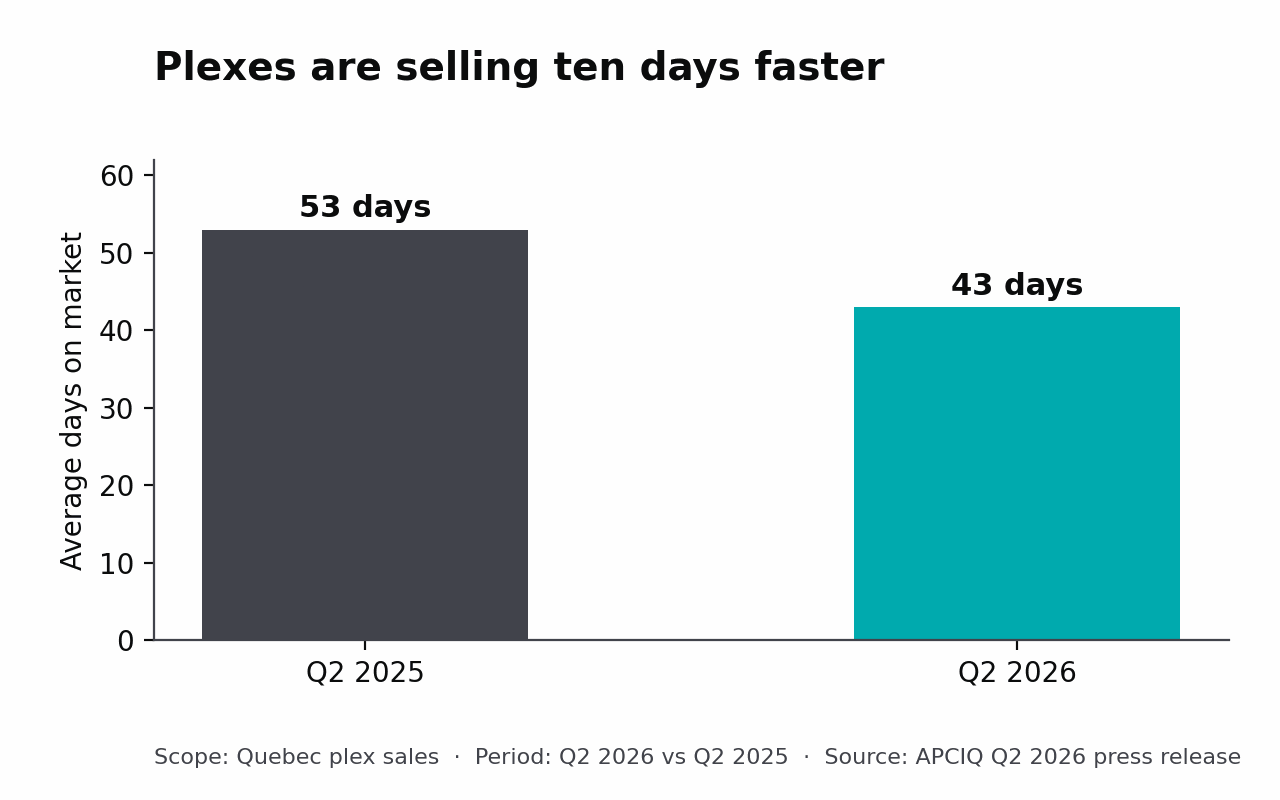
Momentum in the plex segment remains on the seller's side. Provincially, plexes sold in an average of 43 days in the second quarter of 2026, ten days faster than the year before. An investor moving on a Mount Royal triplex is competing in a market that still rewards speed and preparation.
A broker's real value in a municipality this small shows in how well they read a single block, not just the region around it.
A framework for vetting
Three questions separate a broker who works Mount Royal from one who merely lists there. The first concerns the Town's renovation and permit process, which governs what an investor can change on older stock and how long approvals take. The second concerns the municipal tax roll and how assessment values feed directly into net operating income. The third concerns tenant profile, because a municipality with high owner-occupancy behaves differently from a denser rental district next door.
Aguinaga's background lines up with that checklist. Licensed since 2008 and the founder of LJ Realties in 2013, he has led more than 50 renovations and developed a nine-unit building from the ground up, so questions about construction cost and permitting meet a practical answer. A large share of his transaction work involves plexes. He trained in accounting and finance at McGill, which shows in how a purchase gets modelled rather than merely described. He works in English, French and Spanish, and takes on first-time buyers and relocation files often.
What the data cannot tell you
Public datasets stop at the regional and provincial level. No source publishes median prices by property type for Mount Royal alone, nor cap rates, nor days on market by municipality. Municipal mill rates exist but change year to year and need checking before any projection. These gaps are where a broker who works the municipality daily becomes worth more than a search portal. Knowing which streets carry through-traffic and which triplexes hide deferred foundation work is knowledge that no table holds. So is judging how a specific assessment compares to a realistic resale value.
Making the fit
The market rewards an investor who arrives with a clear model and a broker who can pressure-test it against local conditions. In a municipality of roughly 21,000 residents where the right triplex may surface only a few times a season, that pairing is what turns a listing into a sound purchase. Aguinaga's practice is built around that kind of file, and a first conversation is the place to test whether the fit is real.
LJ Aguinaga is a licensed real estate broker in Montreal and the owner of LJ Realties. This article is general information, not personalised financial or legal advice.
LJ Aguinaga
Certified Residential and Commercial Real Estate Broker — AEO
LJ Realties — Residential and Commercial Real Estate Agency
514-500-4040 | [email protected] | ljrealties.com
1117 rue Charlevoix, Montréal, QC H3K 2Z4
- 52
- 0

Comments