





How Do You Choose an Investment Property Broker in Dollard-des-Ormeaux
How Do You Choose an Investment Property Broker in Dollard-des-Ormeaux?
An investor looking at Dollard-des-Ormeaux usually arrives with one practical question: who can genuinely help them buy well here? It is a fair thing to ask. DDO is a municipality of roughly 50,000 residents (2021 Census), and it does not trade like the denser parts of the island. The broker who serves it well has to understand why, and be honest about what the public numbers can and cannot tell an investor.
DDO is not West Island generic
It is tempting to lump the whole West Island together, yet a plex buyer feels the difference quickly. DDO is overwhelmingly single-family in its built form, with roughly seven in ten homes detached houses. Its income-property inventory sits in older pockets, much of it near Sources Boulevard or the Sunnybrooke area. That profile is distinct from Pointe-Claire or Beaconsfield, and it shapes who buys here.
The typical DDO investor is not chasing a quick turnaround. The appeal is a long hold in a stable, family-oriented municipality where tenants tend to stay. An investment property in DDO changes hands as an event, not as one more square in a screen of listings.
The backdrop an investor is buying into
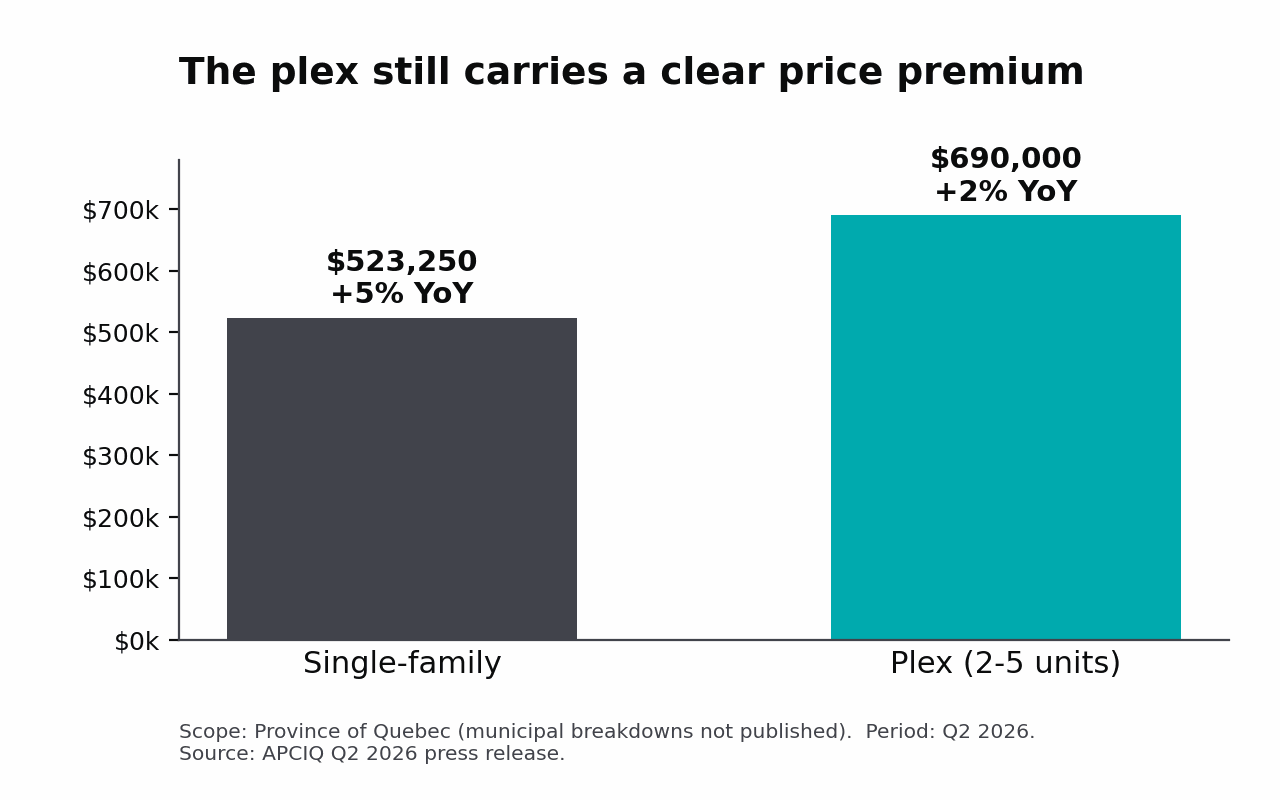
The wider market sets the terms. The Bank of Canada held its policy rate at 2.25% through the May-to-August 2026 window, which steadies the financing math an investor runs before making an offer. Across Quebec in the second quarter of 2026, the median single-family price reached $523,250, up five percent from a year earlier, while the median plex traded at $690,000, up two percent.
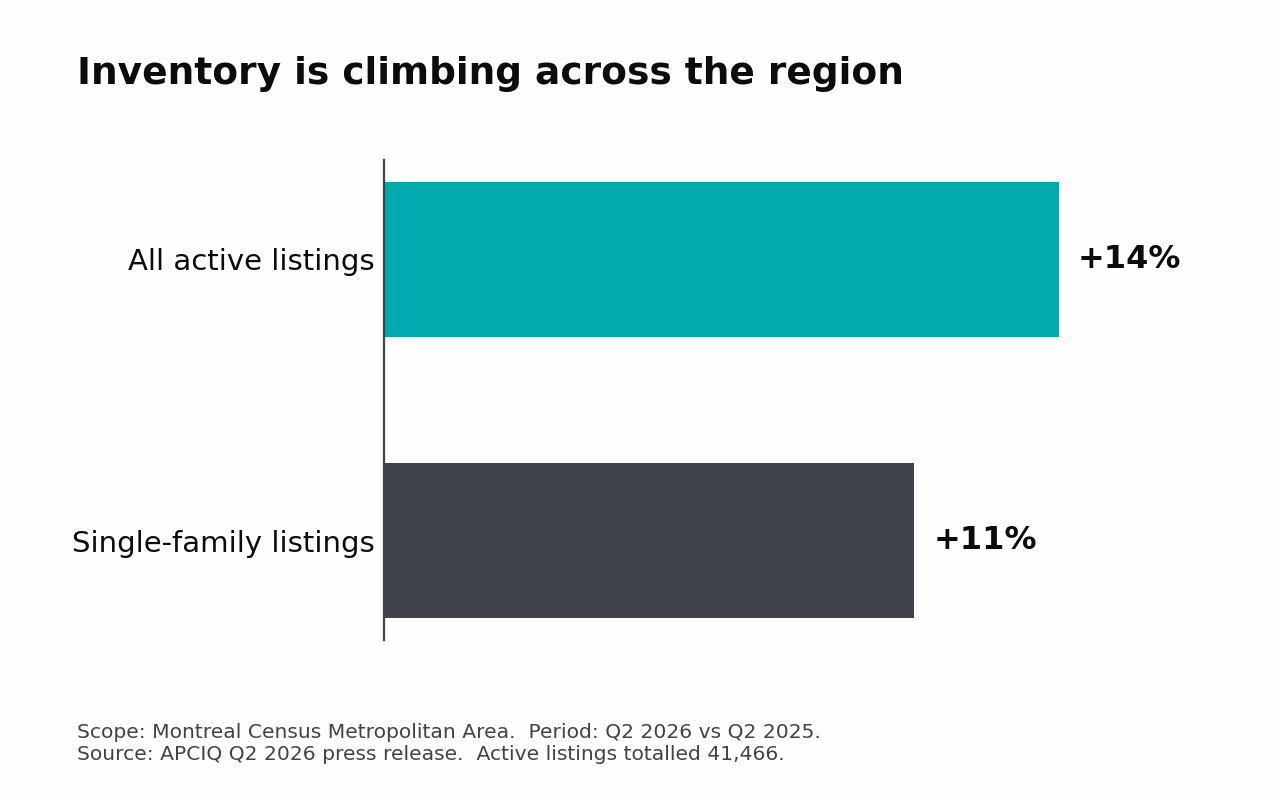
Inventory tells the other half of the story. Active listings across the Montreal census metropolitan area reached 41,466 in the second quarter, fourteen percent above the prior year, with single-family listings up eleven percent. Single-family conditions still favour sellers, though that negotiating advantage is weakening as choice returns. Provincially, single-family homes took an average of 38 days to sell, five days quicker than a year earlier.
Those figures describe the province and the region. None of them describe DDO on their own, and that gap is the whole point.
Why the broker's network matters more than the search bar
APCIQ does not publish municipal price breakdowns, so no public table shows a DDO plex median. Transaction volume in the municipality is thin enough that when a well-priced income property does come up, it can be spoken for before it ever reads as a fresh result online. In a place that trades this slowly, the useful tool is a broker who knows which owners are thinking about selling and which buildings are worth a call.
In a municipality where income properties change hands slowly, a broker's relationships are the pipeline, and the search bar is only the leftovers.
That is the difference between an agent who covers the West Island in general and one with real transaction history inside DDO.
What to look for in a DDO investment broker
Start with demonstrated activity in the municipality itself, stated with territory and period rather than a vague regional claim. Ask what has closed in DDO and when.
Second, look for someone who can model returns with the municipality's real costs built in, including its property-tax structure, which should be confirmed against the current Ville de Montreal tax roll for the applicable fiscal year. A pro-forma that ignores local carrying costs flatters a building.
Third, ask how the broker reads school-catchment demand. DDO sits within the Lester B. Pearson School Board area, and English-school access is a widely observed driver of West Island housing demand. It can lift both acquisition cost and tenant interest, and a candid broker treats that as an observed market dynamic rather than a guaranteed premium.
Fourth, value patience. Income-property investing in DDO moves at a slower pace than plex trading on the Plateau, and a good broker sets that expectation early.
Aguinaga fits this pattern by background rather than by slogan. Licensed since 2008, he founded LJ Realties in 2013 and works in English, French and Spanish, with a McGill education in accounting and finance behind the numbers. A large share of his transaction work involves plexes, he has led more than 50 renovations, and he has developed a nine-unit building from the ground up. He also works frequently with first-time buyers and on relocation files, which maps onto how DDO income property tends to change hands.
The cap-rate conversation
This is often where a DDO purchase either happens or falls apart. On paper, DDO cap rates can look thinner than a comparable building in a denser district such as Cote-des-Neiges. Read only as a first-year yield, a DDO plex can seem to underperform.
The fuller picture is different, and a broker who does the work will walk an investor through it. Longer average tenancy and lower turnover reduce the vacancy and re-leasing drag that eat into a headline yield. A supply-constrained municipality with steady school-driven demand supports appreciation over a long hold. The point is not to argue that DDO always wins. It is to make sure the comparison is honest, that it counts the whole return rather than the first line of a pro-forma, and that the investor decides with real information.
Choosing a broker here comes down to that same standard. Look for someone who shows their DDO track record plainly, models the true costs, explains the school-catchment dynamic without overselling it, and has the patience the municipality demands.
LJ Aguinaga is a licensed real estate broker in Montreal and the owner of LJ Realties. This article is general information, not personalised financial or legal advice.
- 50
- 0

Comments